
TPM Framework Strategy
Turning Assets into a Shared Responsibility Between Operations and Maintenance
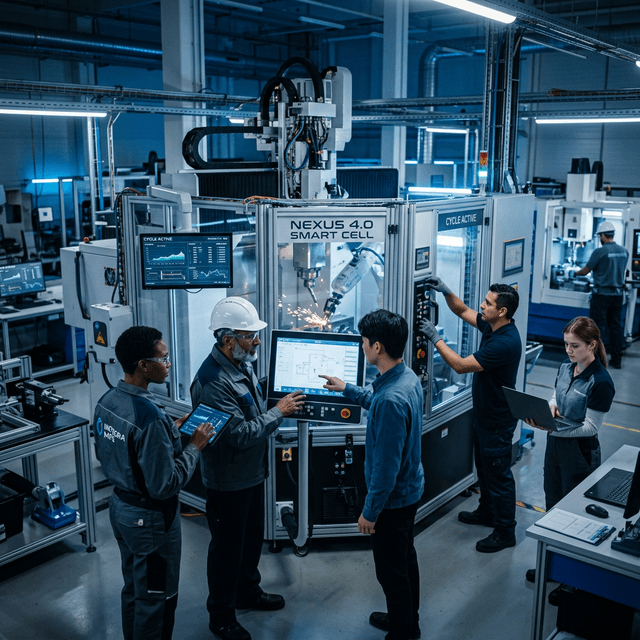
Total Productive Maintenance (TPM) is not just a maintenance technique; it is a cultural revolution. It shifts the burden of "Asset Care" from a small team of technicians to the entire organization, with the goal of achieving the "Triple Zero": Zero Breakdowns, Zero Defects, and Zero Accidents.
1. The Architecture of TPM
TPM is built on eight pillars, all standing on a foundation of **5S** (Sort, Set in Order, Shine, Standardize, Sustain). Without 5S, the pillars will collapse into clutter and inconsistent processes.
The TPM Architecture
Eight tactical pillars built on a foundation of 5S.
Autonomous Maintenance
"Equipping operators to perform basic maintenance (CIL: Clean, Inspect, Lubricate)."
2. Autonomous Maintenance (AM): Pillar #1
The most critical pillar is **Autonomous Maintenance (Jishu Hozen)**. It breaks the traditional barrier of "I produce, you fix."
The CIL Process
Operators are trained to perform daily **CIL (Clean, Inspect, Lubricate)** tasks. Cleaning is not just janitorial; it is an inspection. By touching the machine, an operator can feel abnormal heat, hear a faint bearing whine, or see a small oil leak before it becomes a failure.
Reducing Human Error
40% of maintenance issues are caused by poor operator startup or operation. By involving operators in care, they take "Ownership" and are less likely to ignore equipment stress or bypass safety interlocks.
3. Focused Improvement (Kobetsu Kaizen)
Kobetsu Kaizen teams are multi-functional groups (Quality, Production, Maintenance) tasked with eliminating one of the **Six Big Losses**.
4. Transitioning to TPM
A TPM rollout typically takes 2-3 years to stick. It requires:
- Pilot Area: Start on one machine (the "Model Machine") to prove success before rolling out to the entire factory.
- Skills Matrix: Gap analysis of operator and technician skills.
- Loss Tree Analysis: Identifying exactly where money is being lost to prioritize which Kaizens to run first.